statcounter

Thursday, July 8, 2010

Rock and Roll Writing is...

"What is rock and roll writing?"

This is the first question I received after my announcement that I'm teaching the all new, never-before-ventured online rock and roll writing course at the Basement Writing Workshop in October.

Good question.

Here are some fine examples of rock and roll writing:

Fiction like Nick Hornby's High Fidelity, or Roddy Doyle's The Commitments, or Tom Perrotta's The Wishbones.

Non-fiction like Chuck Klosterman's Fargo Rock City, or Michael Azerrad's Our Band Could be Your Life, or Steve Almond's Rock and Roll Will Save Your Life.

But it doesn't have to be like any of those.

It can be music reviews.

It can be a biography of your favorite band.

It can be a blogged top ten list of your favorite songs, updated by the moment, with elaborate explanation.

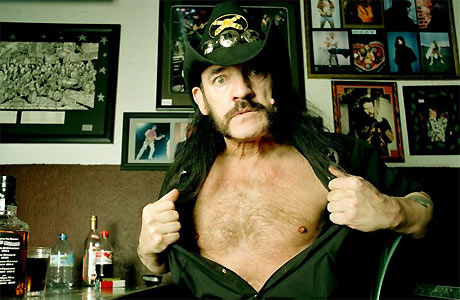
It can be short stories with Lemmy as the protagonist.


Maybe rock and roll writing is what people write who have guitars stored somewhere in their houses.

Go check to see if you have a guitar in one of your closets. Do you? Yes? Then at some point you will probably turn to rock and roll writing.

You might write about the first time you fell in love with music.

Or your first instrument and how much you loved it.

Or the first, most recent, or favorite rock concert you ever attended.

Or the first time you heard Lemmy.


If you were ever in a band, you will surely write about forming the band, or playing your first gig, or best gig, or worst gig.

You will surely write about the band that broke your heart.

If you were ever a solo artist, you may also write about your first solo gig, or best gig, or worst gig, or an obnoxious spectator at one of your gigs.

You'll write about your best song, or best album. Or worst.

It's inevitable. We have to write about our rock and roll lives because, no matter what we've done since, it's part of who we are. For many, it's a big part.

So what is rock and roll writing? It's what people like us write about when we write about who we are.

And that guitar in your closet, the one that barely makes it out these days? That's a big part of it.

And Lemmy's a big part of it too.


Or not.

Sign up now for my online rock and roll writing course at the Basement Writing Workshop and get 15% off.

Yours in laying down the law,

Art


Try Ghost Notes, the award-winning novel, in print form for just $5.


Try Ghost Notes the Audio Book as an unabridged digital download.


Or try Ghost Notes the Ebook.

Sunday, July 4, 2010

The Future of Rock Lit

Rock lit fans have been blessed already this year with Rock and Roll Will Save Your Life, a book by Steve Almond that I rank with Fargo Rock City and Our Band Could be Your Life as one of the best rock non-fiction books in existence.

On a whim the other day, I went to Salon's book page and found out about the new Jennifer Egan novel, A Visit from the Goon Squad, which features prominently a character who's a record producer and veteran of the SF punk rock scene of the 70s.

Now, I love, love, love rock non-fiction, but I get positively ga-ga over rock fiction. Egan's novel doesn't look like a contender for the ever-elusive Great American Rock Novel--her book, at first glance, doesn't rely heavily on a rock and roll setting--but I'd be tickled to be proven wrong. Look for an AVFTGS book review here sometime in the next month.

Then, of course, there's Nick Hornby's latest, Juliet, Naked. Much rock lit goodness there, no doubt. It's in my Powell's cart.

All of this rock lit attention from big publishing has me thinking crazy thoughts about a rock lit revolution...again. Way back in 2004, I published ten reviews of rock lit classics at my website. The pages are no longer available, but there's still a list I published at Amazon years ago of some of the greatest rock reads ever (along with, ahem, my own). Here's that list. I still stand by all of them.

It seems strange to me that more great reads don't exist in this genre. Think of all the people touched by rock music--who bought CDs, attended concerts, bought guitars--and you'd expect more great rock lit to follow. Many have tried, of course, but few have succeeded, and many great writers gave up after one--usually unprofitable--effort.

But I'm just foolish enough to think things can change.

People are finally tired, I think, of what corporate publishing deems worthy of high advances and massive push, and are ready to give something new a chance. Throw in a bunch of rock-happy indie writers--like those who blog regularly at places like The Nervous Breakdown--and I have to believe something is brewing. It might not be the next Chick Lit...but then again, who's to say it won't be? Great genres are carved by great writers, and if great writers are giving the subject serious attention, it won't be long before things change. In fact, I'd go so far as to call it inevitable.

I, for one, am doing my part to make rock lit the next big thing (or maybe the next next big thing). I'm teaching an online course called rock and roll writing at the brand new Basement Writing Workshop. My class is ten weeks long, and you'll get to submit plenty of your rock-tinged work for critique (fiction and non). We'll discuss the special challenges writing about music poses, and the special advantages of the same. Beyond that, there's sure to be plenty of frank discussion about who the greatest band in the world is. It promises to be fun, and stimulating, and fun.

Do you have what it takes to write the next rock lit masterpiece? There's only one way to find out.

Yours in laying down the law,

Art


Try Ghost Notes, the award-winning novel, in print form for just $5.


Try Ghost Notes the Audio Book as an unabridged digital download.


Or try Ghost Notes the Ebook.

Monday, June 21, 2010

The End of the (Paper Books) World as we Know It?

Hello, readers.

My morsel for this week? A bold prediction.

Here we are, three months after the big iPad launch, and I'd just like to put my cards on the table about ebooks and book-books and the future of the biz.

Here are my cards:

I bet real-life books aren't going anywhere.

That's right. I said that real paper books are here to stay, that ebooks, while certainly part of the industry, will never be the industry.

I know this cuts against the normal aura of unpredictability offered up at most publishing-related blogs. The usual spiel goes something like this:

"The iPad and the like will revolutionize publishing, and after so many years, who knows if paper books will even exist anymore?"

I know. They will.

How can I make such a bold declaration? What makes me think I know?

I have many reasons, but they really boil down to one. And that reason is this:

Real books aren't computers.

All the real book really needs to insure its continued existence is that it not start acting like a computer anytime soon. Many people who prefer real books (by some estimates 97% of the book-buying population) don't want to look at a computer for another stretch of time in their day. I look at a computer for (at least) eight hours a day, and one of the reasons I love reading books is that I'm not looking at something with a distinct computer-y essence.

In other words, digital will always be digital, with all the upside and downside that entails.

Think of bowling.

We can play bowling games on the computer, even to the point where one mimics the physical language of bowling in one's living room. But all of that can't replace getting into your car, driving to the bowling alley, renting some shoes, picking out a ball and giving it a go. It's a different experience--some might say better, but definitely different--with its own advantages and disadvantages.

As long as digital is digital (and I don't think there's any threat of digital not being digital any time soon), real books will always have a place in this world.

I will be taking next week off this blog, but get ready for a semi-big announcement (at least for me) in the early part of July.

Enjoy your summer. Second half of 2010, coming up.

Yours in laying down the law,

Art


Try Ghost Notes, the award-winning novel, in print form for just $5.


Try Ghost Notes the Audio Book as an unabridged digital download.


Or try Ghost Notes the Ebook.

Monday, June 14, 2010

Saturday, June 5, 2010

Steve Almond Interview

This week's blog is at the Nervous Breakdown, and it's an interview with the great Steve Almond. Come by and learn which world-famous American novelist is also a closet Moogist.

Yours in laying down the law,

Art


Try Ghost Notes, the award-winning novel, in print form for just $5.


Try Ghost Notes the Audio Book as an unabridged digital download.


Or try Ghost Notes the Ebook.

Saturday, May 29, 2010

Hey Jealousy

Last week I wrote an essay for the The Nervous Breakdown that was pretty much about my envy of Steve Almond, someone whose work I like and respect, and who also seems to get my goat.

I believe this is a common trait of writers. We spend a great deal of time in our heads, dreaming up ideal worlds. Often, we dream of an ideal world that involves our success as writers, and there's nothing worse than someone coming along and playing a role in real life that you've concocted for yourself in your head.

Damn it, that was mine.

Well, there is an upside to envy, as a few have pointed out since my essay was published last week. Envy, they said, is a terrific motivator. It makes the writer redouble her efforts to squash the puss out of the interloper, and the only way to do that is to out-write him.

That asshole. Where's my word processing program?

So, there is something to be said for envy.

But I still think, in a different way, envy is detrimental to the support and fostering of good writing.

Let's say some guy like Steve Almond comes along in the year 2000 or so and writes a book of short stories called--oh, I don't know--My Life in Heavy Metal. Then another writer--let's say me--hears about this book, sees the cover, notices the publisher, reads the reviews, and is struck by a massive wave of envy for this book, this writer, this success. What would this writer--me, in this hypothetical case--do?

Well, I'd get to work--which is what I've been doing for the past decade or so--in an effort to show Mr. Perfect he's not so Mr. Perfect after all.

But what else would I do? Or more to the point, what else would I not do?

Well, I wouldn't buy his book, that's for sure.

And that's fine. This is America. No one has to support anything they don't want to support, and reading My Life in Heavy Metal at its release might have been counter-productive for me. Almond's prose might have been so blindingly good at the time it could have overwhelmed me, pushed me away from writing toward some other preoccupation, perhaps never to return. Skipping it might have been the exact right thing to do.

So, where does that leave us?

That leaves us with writers doing exemplary work and not selling as many books as they would otherwise because of the green-eyed monster.

Now, am I proposing we eradicate envy in the name of book sales? No. A more imposing windmill has never been chased, and I probably wouldn't want to get rid of it even if I could.

I am suggesting we become more aware of the role envy plays in our decisions to support or not support other writers, to read or not read others' works, and what the likely outcome of this envy is for the future of good writing. Because in the end, we want to support those who merit it. If for no other reason, it might be us someday.

Yours in laying down the law,

Art


Try Ghost Notes, the award-winning novel, in print form for just $5.


Try Ghost Notes the Audio Book as an unabridged digital download.


Or try Ghost Notes the Ebook.

Friday, May 21, 2010

New Blog at the Nervous Breakdown

Hey, I have a new blog up at the Nervous Breakdown. It's called, "Steve Almond, Hardbacks, and the Green-Eyed Monster." Let me know what you think.

And now, ladies and gentlemen, Journey.


I always wanted to lead off for Journey.

Yours in laying down the law,

Art


Try Ghost Notes, the award-winning novel, in print form for just $5.


Try Ghost Notes the Audio Book as an unabridged digital download.


Or try Ghost Notes the Ebook.