statcounter

Showing posts with label Rock Lit. Show all posts

Saturday, August 8, 2015

Two Reviews, Six Novels You Need to Know About

I've been very busy lately reviewing books. This is because people send me books to review, so I read and review them. Anything else seems impolite.

Still, I have one rule about reviewing: If I don't like a book, I don't review it. This is partly because of the aforementioned polite thing, but there is also some logic to it. There have been about a thousand books published during the time it took me to write this sentence. If I don't like a book, I don't want you to know about it. I'd rather your bandwidth were taken up by books I'd like you to read, or at least by books that I would not not like you to read. Why would I bring a book I don't like to your attention? The current state of publishing takes care of bad reviews for us.

With that in mind, I've had a couple of reviews published online in the past week or three. First, my 2014 rock novel omnibus review was published at The Rumpus. I worked on this piece for the better part of a year. Names like D'Erasmo and Doyle are bandied about. Check it out.

Also, my review of Patrick O'Neil's Gun, Needle, Spoon came out a little while ago at Entropy.  Good stuffs.

To be clear, I do not, in these reviews, avoid stating what I don't like about these books. Any perusal of the links above will show that much. But if I'm reviewing it, there is something about it worth your attention to my mind.

That being said, feel free to judge my judging for yourself.

Yours in laying down the law,

Art

Watch Stuck Outside of Phoenix the Movie.


Tuesday, July 1, 2014

Rock Lit Summer

I've been picking my way through a few great rock titles this summer, and I'll be reviewing them all in the coming weeks. The first review, of See a Little Light: The Trail of Rage and Melody by Bob Mould, will see the light at HTMLGIANT in July. I was a big Husker fan as a youngster and had plenty to say about Mould's take on the band.

I also just finished the review of the rock novel Wonderland by Stacey D'Erasmo, and I hope to have a landing place for it soon.

I'm currently reading another rock novel, The Sound of Songs Across the Water by Rob Yardumian, and will get to work on a review of it next week.

Then I can finally get into Midnight, Jesus & Me, a memoir by fellow rock freak JM Blaine. I'll write up a review for it in August.

Finally, I'll be updating my Top 20 Rock Novels of All Time in the fall. This update becomes necessary after reading the two rock novels above, and I may re-read one that made the list last year but that many felt I gave short shrift. Look for the updated list in September.

You can wait for my take on these books, but it would be great if you read and wanted to discuss them as well. You can really gone wrong with any of them.

Yours in laying down the law,

Art

Watch the Book Trailer for Badge.


Buy Badge.

Monday, June 23, 2014

Morrissey and Getting What One Wants

I've lately been working on a few pieces about my favorite bands and music artists, and the first popped up this week at Word Riot. It involves Morrissey, chewing tobacco, and my bad post-Refreshments employment record. Give it one paragraph.

Yours in laying down the law,

Art

Watch the Book Trailer for Badge.


Buy Badge.

Monday, August 5, 2013

My Review of Rock Novel WISE YOUNG FOOL by Sean Beaudoin

As a teenager, I wasn’t much of a reader. Sure, I read the sports page, the occasional rock biography, but reading novels meant an assignment leveled at me by a teacher. Homework. These required books—A Tale of Two Cities comes to mind—offered nothing to appeal to my adolescent fantasies, which revolved around wanting to be awesome musician, play in a band, put out records and be chased by groupies. I wanted to be a rock star. Sorry, Madame Defarge, but Gene Simmons wins every time.

In the 1980s, the vast divide between books and rock music couldn’t have been wider. I suspect pop culture was seen as a threat to the vaunted world of books, the barbarians at the gate of The Important Stuff. David Lee Roth had a thousand times more influence on the kids of my era than Holden Caulfield, much less Natty Bumpo, and this no doubt pissed off some people with elbow patches on their suit coats. I of course loved that it pissed them off.

Still, when I turned eighteen and took my first lit class in college, I fell in love with A Clockwork Orange, 1984, Slaughterhouse-Five. These seemed more rock and roll to me than rock and roll, so much so I regretted not having started my fiction life earlier. Had Sean Beaudoin’s Wise Young Fool existed back then, it might have meant an entirely different launching point for my book life.

I’m a big fan of Beaudoin’s work at the websites like The Weeklings, and his first foray into the rock novel seemed the perfect time to jump into his longer efforts. Much of Beaudoin’s verbal talent is in full force in this novel. Here, the author renders the hottest girl in protagonist Ritchie Sudden’s high school class, Ravenna Woods:

So why does she make every dude in the school apoplectic? 

Why does she walk around lobbing a toaster into the collective bath tub?

Hey, let’s not pretend.

It’s her body.

There is simply no ignoring its heft and criminal perk. It’s a monument of taut Austrian hydraulics. If she were flat or fat she’d still be pretty, but no linebackers would be cutting practice trying to get to know her better. Without the badonkadonk and sheik-money strut, guys would hardly be killing themselves to score her fake digits anymore.

You’ve got to figure that level of constant objectification and wheedling hypocrisy would make a girl bitter.

And you’d be right.

Ravenna’s caught two hundred meters below the reef, unwanted sexual pressure crushing her lungs, sharks below and the bends above, nowhere to go but farther inside herself.

Any reader of Wise Young Fool will have no trouble finding such acrobatics, the next tumble of tropes never far from the last, creating a distinctly Beaudoinian joy ride.

The plight of Ritchie Sudden from discontented high schooler to rock hero to juvenile detention attendee is the raison d’etre of WYF, and Ritchie’s frustration is palpable throughout—his unresolved feelings over his sister’s death; his too-busy, too-lesbian mother; his absent father; his disgust with the folks in his class. Most effective are the times Beaudoin touches on the very human teenager behind the wise ass, like when a high school student almost chokes to death in front of Ritchie in the cafeteria.

“Call the nurse,” Lacy says.

“Yeah,” Meb says.

“Right,” I say, but for some reason don’t move. I don’t take charge. I don’t leap to action. I don’t leap at all.

I just sit.

Scared.

Such trepidation is the yang to Ritchie’s sardonic edge, and Beaudoin plies his budding guitarist’s frank observations for all they’re worth. At the detention center Progressive Progress, Ritchie lists his classes: “Art Therapy, How to Do a Job Interview, How to Not Be High All the Time.” Ritchie’s mom’s girlfriend’s boss, a businessman and pool cleaning entrepreneur named Rude, is always worth a few chuckles when seen from Ritchie’s vantage. “There’s always enough dirty pools, leaves, and dead mice and bugs, and kids squeezing out a Baby Ruth in the shallow end to keep [him] busy.”

Answering the call for a literature that says something to young rockers about their lives, Beaudoin includes plenty of teenage rock fantasy moments, like when Ritchie dons his Les Paul in front of his bedroom mirror.

I do the Keith Richards slouch, the Billy Zoom grin, the Chuck Berry duckwalk, the My Chemical Romance dickwalk, the Eddie Van Halen finger-slam, the Hendrix teeth-pluck, the Joe Strummer low-slung, the Jimmy Page smack-daze .... Then I stop screwing around and just straight-out pentatonic air-wail like my man Joe Walsh.

Anyone who owned a guitar as a teenager can relate—or so I’ve heard.

Beaudoin skillfully bounces back and forth in time between Ritchie’s time in juvie and the events that lead to it, but the detention side of Ritchie’s experiences runs thin compared to the drama of his band, his love life, and the moment he commits his crime. Still, Beaudoin seamlessly brings it all together in the end, like the disparate members of a rock band coming down hard on the last note of the night, right before the singer shouts “thank you” and they scurry off.

Teenagers and angst go together like Les Pauls and Marshall Stacks. Luckily, rock is there for those who need a potent release from this mortal coil. If our literature doesn’t show that struggle, it’s the lesser for it. Wise Young Fool offers up a fun, fast-paced and ultimately satisfying road map for the young rocker in search of the way home.

Yours in laying down the law,

Art

Check out the Trailer for Stuck Outside of Phoenix the Movie, which premiered in Tempe in May 2013.


Or try Stuck Outside of Phoenix in print form for just $5.

Or try Stuck for your Kindle for just $2.99.

Monday, October 8, 2012

Stuck the Movie Announcement/New Pieces

First of all, the editor of Stuck Outside of Phoenix the Movie has fallen ill, which means the Nov. 5th premiere date will be impossible to make. No new date has been set. Please send all available good vibes, and I'll keep you updated here.

Second, I have a new review up. It's of Dylan Hicks's rock lit debut Boarded Windows, and it appears at The Los Angeles Review. Check 'er out.

Also, my second ever published political piece, which is called Politics and Sincerity, is up at The Nervous Breakdown. Check 'er out too.

Yours in laying down the law,

Art

Try Stuck Outside of Phoenix in print form for just $5.

Or try Stuck for your Kindle for just $2.99.

Sunday, January 1, 2012

Ten Thousand Saints

For my first post of 2012, I offer you my last rock lit review of 2011, this one of Ten Thousand Saints by Eleanor Henderson. New York Times named it one of the ten best books of 2011. Do I agree? Come find out at JMWW.

Yours in laying down the law,

Art

Try Ghost Notes, the award-winning novel, in print form for just $5.


Try Ghost Notes the Audio Book as an unabridged digital download for just $4.99.


Sunday, December 11, 2011

Review of Tyler McMahon's How the Mistakes were Made

Who's ready for new rock lit? Tyler McMahon has written one of my favs, How the Mistakes were Made, which just came out in October. Read my review of it at TNB.

Yours in laying down the law,

Art

Try Ghost Notes, the award-winning novel, in print form for just $5.


Try Ghost Notes the Audio Book as an unabridged digital download for just $4.99.


Monday, October 3, 2011

Dana Spiotta Review, plus Steve Almond Trailer

I'm going to try (no promises) to make my posts here a little more substantial during the last quarter of the year.

There's a steady stream of rock fiction coming from big publishing these days, and you can bet I have an opinion on all of it. First up is my review of Stone Arabia by Dana Spiotta at elimae.

Also, Steve Almond has a new collection of short stories coming out called God Bless America. I've already read and reviewed it. I could tell you how much I love it, but let's wait for the review to come out. Until then, take a gander at the book's trailer, which is as funny as any you'll see.


I'll let you know when my review of the book is up.

Thanks, folks.

Yours in laying down the law,

Art

Try Ghost Notes, the award-winning novel, in print form for just $5.


Try Ghost Notes the Audio Book as an unabridged digital download for just $4.99.


Or try Ghost Notes the 99 cent Ebook.


Monday, March 14, 2011

Stuck Outside of Phoenix, the Movie and more for 2011

Here's my 2011 newsletter, which just went out to my email list this past weekend.

So much going on in my neck o' the woods in 2011.

First, I've finished my third novel, which is called Badge, which you can read the blurb of here. Badge is out at a few places right now, and I hope to have some good news for you soon. (Where would we be without hope of good news soon?)

Second, I just finished the screenplay adaptation of my first novel Stuck Outside of Phoenix, which will be made into a feature film by Nico Holthaus. Nico is best known for directing the movies Mill Avenue Inc., Beneath the Beauty and the very recent DVD project with Krist Novoselic, Ralph Nader, and other world leaders in Direct Democracy. I've always liked and sympathized with Nico's films, which is why I approached him in 2010 with the idea of Stuck the Movie. Nico can be trusted with Stuck because he lived and breathed the Tempe music scene in the early 1990s, which is where and when the story takes place, and because he can talk Dungeons & Dragons until the cows come home, which has nothing to do with the project but, you know, is kind of cool. When will the movie be ready for you? Let's let Nico do his thing, but know it's being shot this spring, and know it will kick booty. Think Singles but better.

Also, to celebrate the coming film, I've reduced the price of the ebook version of Stuck Outside of Phoenix to $2.99. That's right. For less than the cost of a trip to Starbucks you can be read and enjoy the hell out of Stuck on your fav ebook reading device, or on your computer! Get a head start on the movie. Try it here.

Third, the latest incarnation of my Rock and Roll Writing Course at the Basement Writing Workshop is set to launch! March 28th is the start date. If you follow the publishing industry at all, you'll recognize a lot more noise coming from the rock lit camp these days. (And here's to Jennifer Egan for winning the National Book Critics Circle Award this past week for her rock novel A Visit from the Goon Squad, which beat out Jonathan Franzen's Freedom for the honor). Do you want to be part of the rock lit revolution? Well, it can only happen if you write well, and that's what this class is all about. Click here to sign up.

Yours in laying down the law,

Art

Try Ghost Notes, the award-winning novel, in print form for just $5.


Try Ghost Notes the Audio Book as an unabridged digital download.


Or try Ghost Notes the Ebook.

Monday, November 22, 2010

Art's Rock and Roll Writing Course Re-Ups for Winter 2011! Plus X-Mas Deals on Ghost Notes/Songs from Memory!

I'm finishing up the first semester of my rock and roll writing course at the Basement Writing Workshop, and I can't tell you how much fun it's been. What great projects my students have, and they're all getting better because they took this course.

It's great to be part of the rock lit revolution as it's happening.

"What rock lit revolution?" you ask.

Keith Richards's memoir Life just came out, for which Richards (and his co-writer) received a seven million dollar advance.

The last year has seen rock lit titles by renowned writers like Nick Hornby, Jennifer Egan and Steve Almond, and each has sold well. Even Jonathan Franzen's 2010 mega-blockbuster Freedom features a major character who is a rock musician.

And Patti Smith just won the National Friggin' Book Award for her Memoir Just Kids.

Sound like something you'd like to be a part of? Well, you can't just show up with your axe and expect to play Madison Square Garden. You have to work on your craft, as all of these writers (or co-writers) did. Here's how to start. Sign up for the Winter session of my online rock and roll writing course.

For my class, you can write fiction or non-fiction; as long as it's rock lit, you will have a place at the table. The class is ten weeks long, and you'll get your rock-tinged work critiqued by me and the others in the class, helping you make it the best it can be. And this all happens online, so you can take the class from the comfort of your home. Sound good? Sign up for the Winter 2011 term and get a discount!

Speaking of rock lit, who would like to read (probably) the best example of rock lit ever to be self-published? You think I'm kidding? Check out the crazy good reviews my novel Ghost Notes has received from complete strangers this year:

The Self-Publishing Review

PODBRAM

The Boogle

And here's the best news. My ridiculous deal from last Christmas is back!

You can buy a copy of Ghost Notes, or its companion piece, my solo CD Songs from Memory, from my web site for just $5!

Nowhere on the web will you find these items cheaper. Every copy of Ghost Notes comes signed by the author (he's an ornery cuss, but I can sweet talk him), and all orders of $20 or over ship for free! Would you like to get out cheap with four friends or family members this holiday season? This is the way to do it, and they'll all praise you for turning them on to such a great, rockin', outside-the-box read. Come on over to my store and save big (this book is $15 at Amazon).

I must have lost my frickin' mind to make this offer last year, and I'm certifiably insane to repeat it this year. Come take advantage of my cerebral malaise.

There's big news ahead in my neck o' the woods for 2011. It will include shopping my third novel, which is tentatively titled Good Night to the Rock and Roll Era; writing the screenplay for Stuck Outside of Phoenix; and starting a memoir project (see, if you make it all the way to the bottom of my posts you get rewarded). Much more on each of these in 2011.

Yours in laying down the law,

Art

Try Ghost Notes, the award-winning novel, in print form for just $5.


Try Ghost Notes the Audio Book as an unabridged digital download.


Or try Ghost Notes the Ebook.

Thursday, September 23, 2010

Two Things

Busy week here in the land where the law laid down, so not much time for the blog.

Still, you should know that this is your last week to register for my rock and roll writing course at the Basement Writers' Workshop! Who wants to write the next The Commitments, or A Visit from the Goon Squad, or High Fidelity? Yeah, me too, and I can help you. Sign up. It's going to be fun and rewarding, and it starts next Monday!

Secondly, Kel is finished reading my novel aloud to me, and while I think I have some work to do for revision, it's not an overwhelming amount. What does that mean? It means this novel is going to be ready sooner than I thought. I can see sending out query letters to a few agents by Dec. 1. I didn't expect there was any real chance of getting to this point in 2010, but there it is.

So, woo hoo for me!

Yours in laying down the law,

Art

Try Ghost Notes, the award-winning novel, in print form for just $5.


Try Ghost Notes the Audio Book as an unabridged digital download.


Or try Ghost Notes the Ebook.

Saturday, July 17, 2010

Can You Teach (Rock and Roll) Writing?

Great question.

Yes, one can teach rock and roll writing, like I will in my all new, never-before-ventured online rock and roll writing course at the Basement Writing Workshop in October.

Here's how.

Let's say you want to write about your favorite band, Thin Lizzy. You write a personal essay about how their 1976 album Jailbreak changed your life. You submit it to workshop, wanting feedback.

So, what happens?

People will read it and probably love aspects of it. And probably there will be other things that don't quite work for them.

"Wait," you say. "People are going to judge my essay? What elitist horseshit. Who are they to judge my feelings about my favorite rock album?"

You see, that's just it. In any good writing course, people absolutely would not judge your feelings about your favorite rock album. They'd judge the rendering of your feelings about your favorite rock album. They'd critique your writing, not you.

There might be feelings expressed in your essay you could flesh out better, or arguments you could make more convincingly, or descriptions that could be more vivid.

This will be the case with most everyone's work. There will be something about everyone's writing that is remarkable, and something that doesn't quite come together. It will be our job to suggest ways to make it better.

Now, are these suggestions easy to take? If they are, you probably don't have much invested in your writing. But there will be comments that will have that ring of truth to them, that will make you take pause and wonder if your work could indeed be better. You can always choose to ignore any comments, or you can revise your work with the comments in mind. As the writer, it's your job to make those decisions.

Also, in case you were wondering, in my course it will not be my or anyone's job to try and convince you that Jailbreak isn't the greatest album in the world. That's not at all what we'll do. Any good writing class takes the work you bring to workshop and tries to make it better. I don't want you to write my ideas about Jailbreak--if I wanted that, I'd write my own essay--I want to read about your ideas of Jailbreak, because it will tell me as much about you as it will about Jailbreak.

So, that's how one teaches rock and roll writing. Take the renderings of your ideas about rock and roll and make them better. It's fun, and stimulating, and a great way to hone your writing skills.

And if you sign up now for the course, you get 15% off.

Rock and roll!

Yours in laying down the law,

Art


Try Ghost Notes, the award-winning novel, in print form for just $5.


Try Ghost Notes the Audio Book as an unabridged digital download.


Or try Ghost Notes the Ebook.

Thursday, July 8, 2010

Rock and Roll Writing is...

"What is rock and roll writing?"

This is the first question I received after my announcement that I'm teaching the all new, never-before-ventured online rock and roll writing course at the Basement Writing Workshop in October.

Good question.

Here are some fine examples of rock and roll writing:

Fiction like Nick Hornby's High Fidelity, or Roddy Doyle's The Commitments, or Tom Perrotta's The Wishbones.

Non-fiction like Chuck Klosterman's Fargo Rock City, or Michael Azerrad's Our Band Could be Your Life, or Steve Almond's Rock and Roll Will Save Your Life.

But it doesn't have to be like any of those.

It can be music reviews.

It can be a biography of your favorite band.

It can be a blogged top ten list of your favorite songs, updated by the moment, with elaborate explanation.

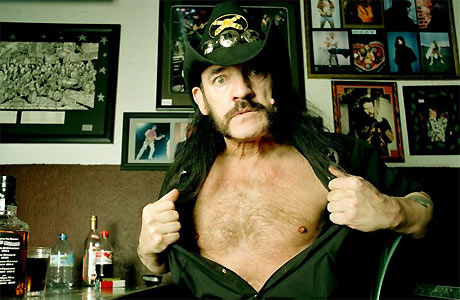
It can be short stories with Lemmy as the protagonist.


Maybe rock and roll writing is what people write who have guitars stored somewhere in their houses.

Go check to see if you have a guitar in one of your closets. Do you? Yes? Then at some point you will probably turn to rock and roll writing.

You might write about the first time you fell in love with music.

Or your first instrument and how much you loved it.

Or the first, most recent, or favorite rock concert you ever attended.

Or the first time you heard Lemmy.


If you were ever in a band, you will surely write about forming the band, or playing your first gig, or best gig, or worst gig.

You will surely write about the band that broke your heart.

If you were ever a solo artist, you may also write about your first solo gig, or best gig, or worst gig, or an obnoxious spectator at one of your gigs.

You'll write about your best song, or best album. Or worst.

It's inevitable. We have to write about our rock and roll lives because, no matter what we've done since, it's part of who we are. For many, it's a big part.

So what is rock and roll writing? It's what people like us write about when we write about who we are.

And that guitar in your closet, the one that barely makes it out these days? That's a big part of it.

And Lemmy's a big part of it too.


Or not.

Sign up now for my online rock and roll writing course at the Basement Writing Workshop and get 15% off.

Yours in laying down the law,

Art


Try Ghost Notes, the award-winning novel, in print form for just $5.


Try Ghost Notes the Audio Book as an unabridged digital download.


Or try Ghost Notes the Ebook.

Sunday, July 4, 2010

The Future of Rock Lit

Rock lit fans have been blessed already this year with Rock and Roll Will Save Your Life, a book by Steve Almond that I rank with Fargo Rock City and Our Band Could be Your Life as one of the best rock non-fiction books in existence.

On a whim the other day, I went to Salon's book page and found out about the new Jennifer Egan novel, A Visit from the Goon Squad, which features prominently a character who's a record producer and veteran of the SF punk rock scene of the 70s.

Now, I love, love, love rock non-fiction, but I get positively ga-ga over rock fiction. Egan's novel doesn't look like a contender for the ever-elusive Great American Rock Novel--her book, at first glance, doesn't rely heavily on a rock and roll setting--but I'd be tickled to be proven wrong. Look for an AVFTGS book review here sometime in the next month.

Then, of course, there's Nick Hornby's latest, Juliet, Naked. Much rock lit goodness there, no doubt. It's in my Powell's cart.

All of this rock lit attention from big publishing has me thinking crazy thoughts about a rock lit revolution...again. Way back in 2004, I published ten reviews of rock lit classics at my website. The pages are no longer available, but there's still a list I published at Amazon years ago of some of the greatest rock reads ever (along with, ahem, my own). Here's that list. I still stand by all of them.

It seems strange to me that more great reads don't exist in this genre. Think of all the people touched by rock music--who bought CDs, attended concerts, bought guitars--and you'd expect more great rock lit to follow. Many have tried, of course, but few have succeeded, and many great writers gave up after one--usually unprofitable--effort.

But I'm just foolish enough to think things can change.

People are finally tired, I think, of what corporate publishing deems worthy of high advances and massive push, and are ready to give something new a chance. Throw in a bunch of rock-happy indie writers--like those who blog regularly at places like The Nervous Breakdown--and I have to believe something is brewing. It might not be the next Chick Lit...but then again, who's to say it won't be? Great genres are carved by great writers, and if great writers are giving the subject serious attention, it won't be long before things change. In fact, I'd go so far as to call it inevitable.

I, for one, am doing my part to make rock lit the next big thing (or maybe the next next big thing). I'm teaching an online course called rock and roll writing at the brand new Basement Writing Workshop. My class is ten weeks long, and you'll get to submit plenty of your rock-tinged work for critique (fiction and non). We'll discuss the special challenges writing about music poses, and the special advantages of the same. Beyond that, there's sure to be plenty of frank discussion about who the greatest band in the world is. It promises to be fun, and stimulating, and fun.

Do you have what it takes to write the next rock lit masterpiece? There's only one way to find out.

Yours in laying down the law,

Art


Try Ghost Notes, the award-winning novel, in print form for just $5.


Try Ghost Notes the Audio Book as an unabridged digital download.


Or try Ghost Notes the Ebook.

Monday, June 14, 2010

Friday, May 21, 2010

New Blog at the Nervous Breakdown

Hey, I have a new blog up at the Nervous Breakdown. It's called, "Steve Almond, Hardbacks, and the Green-Eyed Monster." Let me know what you think.

And now, ladies and gentlemen, Journey.


I always wanted to lead off for Journey.

Yours in laying down the law,

Art


Try Ghost Notes, the award-winning novel, in print form for just $5.


Try Ghost Notes the Audio Book as an unabridged digital download.


Or try Ghost Notes the Ebook.

Friday, October 30, 2009

Juliet, Naked

You can now buy the digital download of Ghost Notes the Audio Book at CDBaby.

And please listen to "Incident," download it for free, and pass it on to friends and family.

Hey, there's a new rock novel by a major player just released!

It's called Juliet, Naked, and it's by Nick Hornby. This is the same Nick Hornby that brought us High Fidelity, the crown jewel of modern rock novels.

I always like it when someone tackles this "genre." If you ask me, it's a shame Rock Lit doesn't have its own shelf at your local bookstore. What could be more natural for those of us who loved rock music than to curl up with a well-written novel about rock musicians? Always seemed like a good fit to me. Oh well. If nobody else wants it, I'll take it.

Me and Nick Hornby, that is.

I haven't read Juliet, Naked yet, but I did read High Fidelity, and I thought it hit on something essential about my era (1983-1998) of rock music fan, in particular, our need to create a hierarchy of our favorite bands or songs.

This is something I did obsessively when I was a kid. I can still remember a few of my lists. Here's one from when I was fifteen:

1) Van Halen
2) Rush
3) Led Zeppelin

When I was seventeen, it mutated to:

1) Rush
2) Led Zeppelin
3) Triumph

(Gotta love Canadian rock.)


By the time I went to college, things had changed:

1) REM
2) Replacements
3) Husker Du

And when I moved to Tempe, Arizona, things really changed:

1) Dead Hot Workshop
2) Gin Blossoms
3) Beats the Hell out of Me

I have a theory why we're compelled to rank our favorite bands like this. I think it has something to do with the power the music has over us, and it's our way of giving that power shape and order. If we can rank our favorite bands correctly, we can control them in a way that's satisfying, understand them in a way that we hadn't before. It's part of our identity, what these bands are to us, what order we place them in. Kind of like the Holy Trinity, but with guitars.

I quit making lists like this some time ago, but I still keep my favorite bands in mind, and sometimes even broken into specific categories. For example:

My favorite band of all time:

Dead Hot Workshop

My Favorite band of the Aughts:

The Shins

My least favorite band of all time:

The Animals

My favorite metal band:

AC/DC

My favorite punk band:

Minor threat

My favorite English band:

The Smiths

My favorite band of the 90s:

Pavement

My favorite band of the 80s:

Camper Van Beethoven

My favorite solo singer:

Morrissey

My favorite band that I shouldn't like at all:

Journey

Actually, I just thought up a few of those on the spot, but it was fun.

What are your Top Three of All Time?

Yours in laying down the law,

Art

Buy Ghost Notes, the novel or brand new audio book.


Buy Songs from Memory, the album


Buy Stuck Outside of Phoenix, the novel

Saturday, August 4, 2007

Portland Show Update/Rock Lit

I’m afraid I have to start with a bit of bad news. Stephen Ashbrook has graciously asked to bow out of our Uhavegonaway to Oregonaway Show Saturday, September 1, Labor Day weekend, at the Mississippi Pizza Pub in Portland, Oregon from 6 to 8 PM. Stephen has a family outing he’s looking forward to, and he can't make it. So, no Stephen on 9/1. He will be missed.

In an effort to fill the void, Jim "Jimmi G" Gerke and I will be doing a short set together, which will include covers from some of our favorite bands, including a few that fit the theme of our show. You can count on songs by…Oh, you’ll just have to come and find out.

So, to update, Gerke plays first, Gerke and I hold down the middle, Art plays last.

You’re probably wondering how much this little shindig of ours is going to set you back. Surely, for a couple of hours of entertainment you’re prepared to dish out a few bucks. You’ve done it before, and this Uhavgonawhatever sounds right up your alley. Well, guess what?

It’s free.

That’s right. You will not pay a cover to come and hear Jim Gerke, and Art Edwards, and Jim Gerke with Art Edwards, and anyone else we can cajole into playing that night. You can save your cover for a drink, or for dinner, or for later in the evening when you go see a band. This one’s on us. Everyone have a good time.

Of course, if you must pay for something, copies of Stuck Outside of Phoenix will be on sale.

I promised some more publishing talk, so here it goes.

From my experience trying to get Ghost Notes published, I could draw some blanket conclusions. For example:

1) Ghost Notes is not good enough to get published.

2) Those in the publishing industry are blind to the potential of Ghost Notes.

3) People are not interested in reading rock novels.

Which do I believe?

None of the above.

I don’t believe number one because my novel is damn good, and you’ll just have to trust me on that until it comes out. I wouldn’t have wasted a year trying to get it published if it weren’t.

I don’t believe number two because people in the publishing industry are just like everyone else: they want to keep their day jobs. Representing and publishing rock literature is not a good habit to get into if you want to eat, pay the mortgage and advance your career. There are easier sales out there, and they have to take it where they can get it.

I don’t believe number three because most readers either have no idea there are such things as rock novels, or the rock novels they’ve read haven’t been very well-written. It’s a sad commentary on the genre that few seem to do it well, or if they do, they write only one such book before moving on to a more respected, or lucrative, genre.

But I don’t think this genre can be ignored by the publishing industry. Here’s why I think rock novels are so important.

If you follow publishing, you’re probably aware of the fairly recent NEA study "Reading At Risk" that found a sharp decline in young readership, and in particular young male readership, over the last ten years. Things were already pretty bad in this demographic, but to generalize the finding, people, in particular men, 18-34 years of age are less likely than ever to read anything for pleasure, much less fiction.

Why would that be? Why would people roughly my age and younger be turning away from the novel form, or from reading for pleasure in general?

Here’s why.

Most literary genres—erotica, Sci-fi, western, chick lit—play to our curiosities. If we read sci-fi, we're curious about outer space. If we read westerns, we're curious about being a cowboy. If we read erotica…you get the picture. These genres play to our curiosities and thereby capture our imaginations, making us devoted readers.

What are the curiosities of people, particularly men, in this under-represented demographic? (Okay, not that curiosity.) Well, I know what mine was. I wanted to know what it was like to be in a big rock band. I wanted to know what the gigs were like, the inter-band relationships. I wanted to know how it felt to "get signed," have a song on the radio, play big arenas, meet Gene Simmons.


I don’t think it’s a crazy leap to think that part of the demographic that is less likely to read for pleasure is also the demographic that grew up listening to rock radio, that bought CDs and guitars, that idolized Jimmy Page, David Lee Roth, Bono, and Kurt Cobain. They bought records and read the album sleeve while the record played. They went to concerts and rocked out and wondered what went on backstage and on the tour bus and back at the hotel. They would’ve done anything to shake the hand of their hero and say, “Your music changed my life.”

The industry--writers and publishers--has failed this demographic because they haven’t played to these people’s curiosities. They haven’t, on a very basic level, given them what they wanted. We've missed the boat.

So far.

Next week, learn how I plan to help this little cause along.

Art

Sunday, March 25, 2007

From "Nickel" to the Refreshments

First of all, thank you, Jonathan Lethem, for bringing some attention to the much-ignored form of the rock novel. Everyone who's interested in reading more novels dealing with this type of subject matter should send a message to traditional publishing by buying You Don't Love me Yet.

And guess what? Lethem also has music to go with his book! Take a listen here.

Of course, he’s not the only one.

Today I want to take you from the band origins of “Nickel” to the beginning of the Refreshments. As you may or may not know, “Nickel” was written long, long ago by a band called the Solemines. The Solemines, consisting of Tim Anthonise, Jim Gerke, Dan Lancelot, and me, were regulars in the Tempe music scene circa 1990-1991. We led off for the Gin Blossoms at the Sun Club and elsewhere. (Incidentally, the Gins paid $75 for their lead-off acts back then. I wonder what they pay now.) After a change of drummers, the Solemines continued for a short time in the basement of drummer Dustin Denham’s house, circa 1992. This second incarnation, which we ingeniously called “Solemines II,” never played a gig, but within the batch of material from this period are some of my favorite Solemines songs. “Nickel” is from this batch.

For years, it killed me this music was never played for people, much less recorded. Scratchy practice-room takes were the only proof the songs ever existed. I’m sure many of you have band stories about the songs that got away. “If only you could’ve heard them.”

Well, now we can hear at least one of them, and maybe someday we’ll record more.

When Solemines II disbanded, Dusty and I remained in contact, and eventually we got the lead singer of the Solemines, Jim Gerke, to come over and goof around with us in Dusty’s basement. This new musical act, which we called the Hanson Brothers--not to be confused with the real band called the Hanson Brothers from Canada--had a decidedly different take from Solemines II, or Dusty’s previous band, the Mortals. We were a bit sillier, a bit more tongue-in-cheek, and we certainly weren’t afraid to embrace our less-than-cool side. (Our most popular cover was “Don’t Tell me you Love Me” by Night Ranger.)

The Hanson Brothers played out maybe six or seven times, leading off at places like Papillon’s on Apache in Tempe. (We were supposed to lead off Christmas night at Hollywood Alley, only to be told at the door there were too many bands on the bill and we couldn’t play.) We managed to secure a New Year’s Eve gig in 1992 at Papillon's, leading off for the Phosphenes, and that was the extent of the Hanson Brothers’ penetration into the Tempe music pantheon.

Early in 1993, as the Hansons waned, Dusty, still itching to play, offered to call the lead singer of his previous band, the Mortals, who had just gotten back from an extended trip to a place called Taipei, Taiwan. I had reservations. The Hanson Brothers hadn’t officially disbanded, even though we’d all but ceased to practice. I was also working hard, and well into my senior year at ASU; I didn’t have a ton of time to dedicate to a new project.

Still, Dusty persisted, and in April of 1993, I relented.

Next week, hear about this exciting new band’s first practice.

Art